Meta Ads vs Google Ads is a decision about how your business will reach and serve demand. Google search campaigns can connect with a question or purchase need expressed in a query. Meta campaigns can introduce an offer through social discovery and other eligible placements, using creative to make it relevant. Both ecosystems support several campaign types, so choose the mix by the customer decision, offer, economics and measurement rather than a rigid “search sells, social only creates awareness” rule.
For a small business or ecommerce brand, the practical question is which route can produce suitable enquiries or profitable customers at an acceptable cost. Cheap clicks and attractive platform conversion totals are useful observations, but they do not settle that question.
In this guide
- What does Meta Ads vs Google Ads actually compare?
- How does demand creation vs demand capture help planning?
- Social vs search advertising: when should Google search come first?
- Social vs search advertising: when should Meta come first?
- How do ecommerce acquisition channels change the prerequisites?
- Meta Ads vs Google Ads: what should a service business prepare?
- How should creative differ in social vs search advertising?
- Meta Ads vs Google Ads: what should the landing pages explain?
- How should the paid media channel mix be measured?
- How can retargeting support the paid media channel mix?
- How should a small budget choose its paid media channel mix?
- What should the first Meta Ads vs Google Ads review examine?
- What should a Meta Ads vs Google Ads comparison avoid?
- How do you improve the paid media channel mix over time?
- Frequently asked questions
What does Meta Ads vs Google Ads actually compare?
First specify the campaign types. Comparing a Google search campaign with a Meta social campaign is clearer than comparing two entire platforms as though each only performs one task. Google Ads also includes other formats and inventory, while Meta delivery can vary by objective, placement and setup.
The visitor’s starting point matters. A person searching for a replacement part has already expressed a need. A person encountering a useful product demonstration in a feed may recognise a need they had not yet articulated.
Neither starting point proves purchase readiness. A searcher may be researching rather than buying. A social viewer may already know the brand and be close to choosing. Use the actual audience and offer context when designing the journey.
An integrated digital marketing plan should define the role of each campaign and the evidence needed to judge it, instead of assigning permanent winner and loser labels to platforms.
How does demand creation vs demand capture help planning?
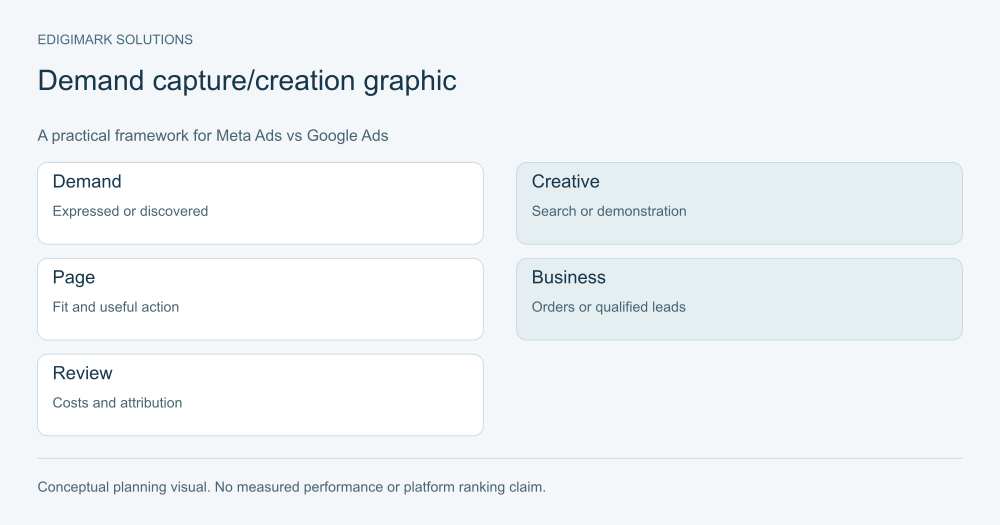
Demand capture serves people already expressing a relevant need. A service search, product comparison or availability query can provide that signal. The campaign should give them a destination that answers the task directly.
Demand creation introduces or clarifies a problem, use case or product for people who may not be actively searching. Creative can demonstrate what the offer does and why it matters. The next action should reflect the degree of understanding and commitment the message creates.
These roles can overlap. A product demonstration can reach an existing buyer, while a search ad can introduce a brand the person has never considered. The distinction is a planning lens, not a claim that every visitor belongs to one category.
For a hypothetical home organisation product, a search campaign might answer “drawer organisers for small kitchens.” A social campaign might demonstrate how the product works in a confined kitchen. Both need accurate dimensions, availability and a usable purchase page.
Social vs search advertising: when should Google search come first?
Search can be useful when the relevant need is already expressed in identifiable queries and the business can serve it. A local repair service, a specialist product or a known category may have a clear commercial entry point.
Inspect the queries and results before building the campaign. A broad phrase can have several meanings; a query dominated by instructional resources may need a different offer from one dominated by provider or product pages.
Align the ad with a suitable destination. A buyer seeking a specific service should not have to find it again inside a generic homepage. A product evaluator needs specifications and compatibility information, not only a lifestyle message.
Google’s landing-page guidance supports relevant information and a usable destination. Those basics matter before the business makes a confident judgement about channel performance.
Social vs search advertising: when should Meta come first?
Meta can be useful when an offer benefits from demonstration, visual explanation or a recognisable use case. A product that is difficult to describe in a short query may be easier to understand through a practical video or sequence of images.
It can also help test whether a message resonates with a relevant audience. Define the intended outcome first. Meta Blueprint’s campaign-objective introduction connects business goals with objective selection. Check the current account options and choose a configuration that supports the intended action rather than defaulting to cheap traffic.
The creative must provide a reason to pay attention. An attractive product photograph may be useful, but a demonstration of fit or use can answer a more specific question. Meta’s Reels advertising guidance also illustrates the importance of building assets for the placement rather than assuming one crop suits every format.
These principles do not guarantee outcomes. Validate the offer and the resulting customer quality under a bounded test.
How do ecommerce acquisition channels change the prerequisites?
An ecommerce campaign needs accurate product information and a reliable route to purchase. Show price, availability, dimensions, compatibility and fulfilment terms where relevant. Test variants, basket behaviour, checkout and order confirmation.
For Google Shopping, Google’s product-data guidance describes the role of information submitted through Merchant Center, including descriptions, images, prices and availability. Its Shopping overview explains that product data influences matching rather than following the same keyword model as text search campaigns.
Keep the product feed and website consistent. Advertising an item that is unavailable or priced differently from the landing page creates a poor experience and can produce account issues. Assign an owner to inventory and feed quality.
For social campaigns, product creative should still represent the item accurately. A visual that hides size or compatibility limits can attract attention while increasing disappointment and returns. Acquisition and fulfilment belong in the same commercial review.
Meta Ads vs Google Ads: what should a service business prepare?
A service business needs a clear scope, supported geography, useful proof and a functioning enquiry route. The page should explain what the customer can request and what happens next.
Search campaigns may capture a specific service need. Social campaigns may introduce the problem or show the process. The action can differ by readiness, but both should describe the offer honestly.
Define lead suitability before launch. A form submission outside the service area or requesting an unsupported job should not be treated as equal to a suitable enquiry. Record rejection reasons that can guide the campaign or page.
Connect the enquiry with the correct owner and preserve relevant context. CRM integration can support the record, while marketing automation can provide acknowledgement and appropriate routing. The human follow-up still needs to build on what the visitor asked.
How should creative differ in social vs search advertising?
Search copy should answer the expressed need and give a credible reason to choose the destination. Important qualifications can help the right visitor recognise fit. Avoid a broad promise that attracts people the business cannot serve.
Social creative often needs to establish the context before presenting the action. Show the problem, use case or product function clearly. Keep key information readable and ensure the asset remains understandable in the relevant placement.
The message can remain consistent across channels while the explanation differs. A product’s main capability should not change, but a searcher evaluating compatibility may need a different first sentence from a viewer seeing the product for the first time.
Test meaningful explanations rather than only visual decoration. Compare a use-case demonstration with a feature explanation when both are accurate. Record which audience and offer the comparison serves so the result informs a decision.
Meta Ads vs Google Ads: what should the landing pages explain?
Help the visitor assess fit, understand the offer and take a suitable action. Keep the ad promise and page aligned, provide relevant evidence and make important requirements easy to find.
For a product, this includes specifications and fulfilment information. For a service, it includes scope and process. For a resource, it includes what the resource provides and how it will be delivered.
Test usability on the devices visitors use. A page that works in a desktop design review may fail on a phone through overlays, form behaviour or checkout controls. Check the whole route, including external scheduling or payment steps.
Conversion rate optimization can identify decision barriers, and web development can implement and verify repairs. Page improvements can benefit several channels, so record them as shared journey changes where appropriate.
How should the paid media channel mix be measured?
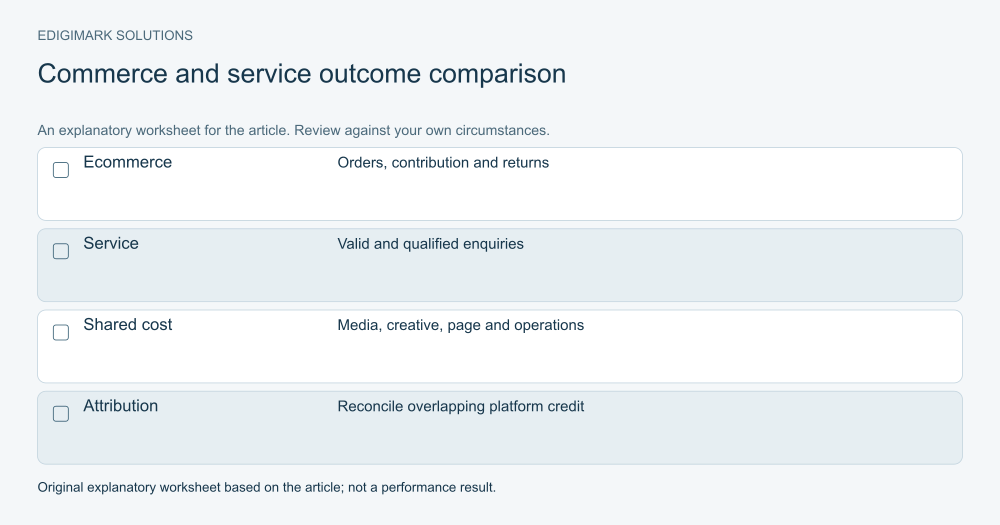
For ecommerce, examine suitable commercial outcomes alongside platform metrics: orders, contribution, refunds, repeat behaviour and customer acquisition cost where the data supports them. A large revenue figure can conceal thin margin or returns.
For services, distinguish recorded submissions, valid enquiries, qualified leads, opportunities and customers. Compare costs at the stages that matter and allow enough time for outcomes to mature.
Keep media-only and fully loaded costs labelled. Management, creative, page work and follow-up can differ between routes. A comparison that includes operating costs for one platform and excludes them for the other is misleading.
Use data analytics to connect observed outcomes, while recording attribution limitations. Platform totals may overlap when someone sees a social ad, later searches and eventually buys. Do not add attributed conversions and call the sum unique customers without reconciliation.
How can retargeting support the paid media channel mix?
Where permitted by user choices and platform rules, retargeting can provide a relevant reminder or answer a remaining question. It should reflect what the person has already done and the current availability of the offer.
A product viewer may need compatibility or delivery information. A resource reader may need a practical example. A customer who already bought should not automatically receive the same acquisition message as a new prospect.
Use suppression and audience maintenance where the available systems support them. Keep the content useful and avoid presenting retargeting as proof that a campaign is creating new demand. Some of its audience may already be close to acting through another route.
Judge the role with appropriate reporting and, where feasible, controlled evidence. A platform-attributed return visit alone does not establish the incremental effect of the reminder.
How should a small budget choose its paid media channel mix?
Choose the test most likely to answer the important current question. If the business has clear commercial searches and a ready page, a focused search test may be informative. If the product needs demonstration and the relevant audience can be reached, a focused social offer may be appropriate.
Reduce scope rather than launching many underfunded campaigns. Choose one offer or product group, a supported market and a clear outcome. Keep resources available to repair the page or process if the test reveals a problem.
Do not choose solely from a generic claim that one platform has cheaper clicks. Cheap attention can be irrelevant, and expensive attention can be useful. The acquisition economics and customer quality determine whether the route is sustainable.
What should the first Meta Ads vs Google Ads review examine?
Verify recording and fulfilment before judging efficiency. Confirm that orders or enquiries are received, promises are delivered and the data definitions are consistent.
Inspect audience relevance and actual outcomes. Review a sample of leads or orders to understand the difference between platform activity and business value. Use mature cohorts where later progression matters.
Discuss the creative and page together. A strong visual with a weak destination may create interest that cannot progress. A clear page receiving unsuitable traffic needs a targeting or offer review. Several layers can contribute.
End with a specific decision: revise the message, repair the page, change the scope, hold for more evidence or expand a credible segment. Avoid a blanket verdict about an entire platform based on an unclear or very small test.
What should a Meta Ads vs Google Ads comparison avoid?
Avoid treating every Google campaign as search-only or every Meta campaign as awareness-only. Avoid comparing engagement with purchases as though they were equivalent. Avoid copying another brand’s asset or budget without knowing its economics and audience.
Do not use platform case-study percentages as expected results for your business. Do not assume a higher return-on-ad-spend figure proves better profit without considering margin, refunds and attribution.
Keep offer accuracy central. A channel mix cannot solve an unavailable product, a misleading promise or a business that cannot handle enquiries. Those problems belong in the plan before acquisition is expanded.
How do you improve the paid media channel mix over time?
Use each test to improve the shared understanding of the customer. Search can reveal expressed questions; social response can reveal which demonstrations or contexts resonate. Sales, support and fulfilment feedback add the practical meaning behind those observations.
Keep the evidence connected rather than allowing each account to report success with a different definition. Review the mix as the offer, market and capacity change. The best allocation is a decision based on current facts and known uncertainty.
Discuss your acquisition mix with Edigimark if you need to connect demand, creative, page experience and commercial outcomes into one usable plan.
Keep a short decision log alongside the channel reports. Record the offer, audience, relevant costs, known measurement limits and reason for the next change. When a new creative, page or product group is introduced, note the date and affected campaigns. This context helps the team understand later movement without inventing a causal explanation from a single chart. It also keeps the channel mix focused on the business decision rather than whichever platform metric looks strongest that week.
Frequently asked questions
Which platform is better for ecommerce?
It depends on the products, demand, creative, economics and site readiness. Search and Shopping can serve expressed product needs; social creative can demonstrate use and introduce an offer. Compare profitable customer outcomes under a clear test rather than assuming one platform suits every store.
Which platform is better for a local service?
Relevant search demand can make search useful, while social campaigns can introduce the service or a practical use case. Geography, scope and enquiry quality matter. Choose the route that addresses the current gap and fits the business’s capacity.
Should I use the same landing page for both?
Use it when the offer and visitor decision are sufficiently aligned. Different readiness or product context may require a different explanation. The destination should be useful for the actual campaign, not duplicated automatically or shared only for convenience.
Is a lower cost per click a reason to switch platforms?
Not by itself. Compare suitable actions and downstream value. A low click cost can produce irrelevant traffic, while a higher cost can reach a useful buyer. Include operating costs and attribution differences before moving the budget.
Can both platforms claim the same purchase?
Their attribution rules can credit different interactions in one journey. Reconcile platform reports with business records before adding the totals. Use the settings and limitations to interpret the evidence rather than treating every credited conversion as a separate customer.