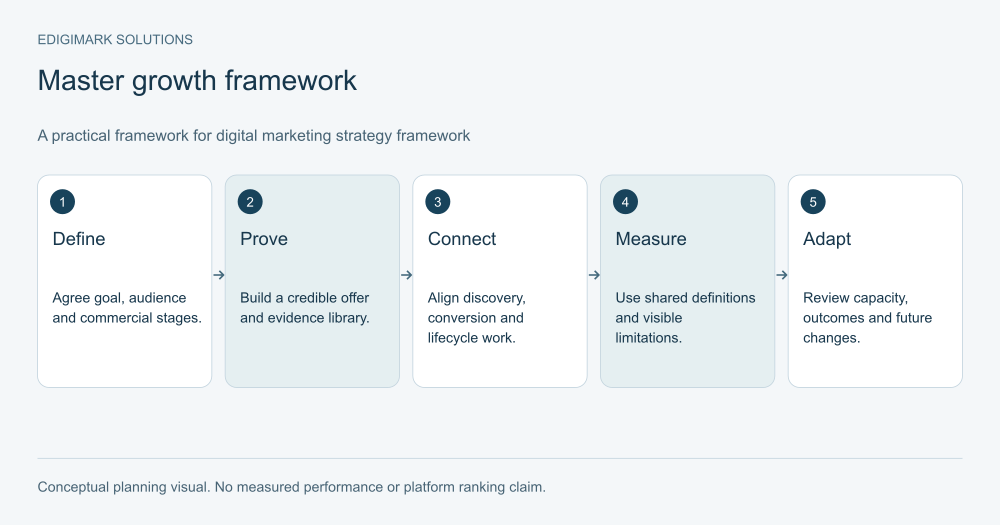

Automated lead follow-up can acknowledge a request, deliver useful information and coordinate the next task while a person handles questions that require judgement. Preserve the original context, use honest personalisation and stop competing messages when the relationship changes. The human touch comes from a relevant response and accountable ownership, rather than inserting a first name into generic copy.
Automation is most useful when it makes a promise dependable. It can ensure that an explicit enquiry reaches the right team and that an unresolved request becomes visible. It becomes frustrating when it repeatedly asks for a meeting after one is booked or pretends someone has personally reviewed information they have not seen.
Design the operational and customer experience together. Every automated step should leave a clear route to appropriate human help.
In this guide
- Which lead follow-up tasks are suitable for automation?
- Where should a person take over lead response workflows?
- What should an honest automated acknowledgement say?
- How can personalized follow-up use context accurately?
- What information belongs in the human lead handoff?
- How should lead response ownership and expectations be designed?
- What should automation suppression stop or change?
- What does a follow-up decision tree look like?
- How should follow-up handle a detailed technical enquiry?
- How should follow-up handle an early-stage resource request?
- How should follow-up handle an existing customer enquiry?
- How should replies and scheduling changes be handled?
- How can automated follow-up avoid repetitive messages?
- What should a paused follow-up process do next?
- How should automated lead follow-up be measured?
- How should lead response workflows be tested?
- How should the team maintain a human follow-up standard?
- Frequently asked questions
Which lead follow-up tasks are suitable for automation?
Repeatable actions with clear rules are useful candidates: receipt acknowledgement, requested resource delivery, routing, internal reminders and updates to an agreed operational state.
The rule should depend on an event the system can recognise reliably. A successfully submitted enquiry has a different meaning from a click on a contact button. Confirm that the trigger represents the intended action.
Keep the customer’s expectation visible. A demo request needs an appropriate route to the responsible team. A resource request needs accurate delivery, with any later nurture based on eligibility and relevance.
Marketing automation should begin with the task and promise. If a step cannot be described clearly enough to test, adding a workflow may create more ambiguity rather than dependable follow-up.
Where should a person take over lead response workflows?
Use human review when a request needs interpretation, a tailored recommendation or a discussion of constraints. Examples include a technical compatibility question, an unusual delivery requirement or uncertainty about whether the business can help.
An explicit reply should reach an accountable reader. The team needs to distinguish a substantive request from an automated response or an administrative message according to the tools and process in use.
Create a visible review route for incomplete but potentially relevant enquiries. Missing profile data should not prevent a person from responding to a clear question. Nor should automation invent details to complete the record.
Define the handoff condition and the receiving team’s responsibility. A notification is only a signal. A human lead handoff is complete when the team accepts ownership and chooses the appropriate next action.
What should an honest automated acknowledgement say?
Confirm what the system actually knows: that a request was received, which subject it concerns and what the person should expect next. Keep the message concise and truthful.
An original illustrative acknowledgement could read:
> Thanks for your enquiry about CRM integration. Your request has been received by the relevant team. If you need to add information about the systems involved, you can reply to this message.
Use that wording only when the route and monitored reply inbox exist. If the request has not yet been assigned, do not claim a named specialist is reviewing it.
State response expectations only when the business can fulfil them. A promise about timing needs actual coverage and a fallback. Avoid generic claims of immediate personal attention when the message is only an automatic receipt.
How can personalized follow-up use context accurately?
Use information the person provided or reliable relationship context. Refer to the requested service, relevant resource or stated question. Explain why the next message is useful to that need.
Avoid adding inferred facts as though they were confirmed. A visit to an implementation page does not prove a migration project is underway. A professional title does not establish purchase authority.
Handle missing values gracefully. A message should remain clear without a first name, company or role. Test those cases rather than allowing broken tokens or awkward assumptions to reach the customer.
Personalisation can also mean choosing not to send. Someone already discussing requirements with an owner may need a contextual human response instead of another introductory email. Relevance depends on the relationship, not only the available merge fields.
What information belongs in the human lead handoff?
Include the original request, the promised response, relevant account context, known constraints and any current relationship owner. Keep confirmed facts distinguishable from assumptions and unresolved questions.
Summarise meaningful activity rather than provide an unexplained stream of every recorded interaction. The receiving person needs to understand the subject and the reason a response is useful.
Record the current next action and the route for reply. If another team is already engaged, make that visible before assigning a competing owner.
CRM integration should carry this context reliably. A warm-sounding message cannot compensate for a salesperson who receives only a name and has to ask the person to repeat everything they submitted.
How should lead response ownership and expectations be designed?
Assign responsibility according to the actual operating model. Service, region and account relationships can guide routing where they meaningfully affect who should respond.
Provide a monitored fallback when information is missing or the intended owner is unavailable. A queue labelled “general” still needs a coordinator who understands how to resolve it.
Agree internal review expectations and external promises together. The business should know its coverage, workload and escalation route before setting a response-time message. There is no universal deadline that fits every enquiry and team.
Make unresolved ownership visible. An internal reminder can support recovery, but repeated reminders do not solve inadequate capacity or unclear assignment. Review the underlying cause when the same exception recurs.
What should automation suppression stop or change?
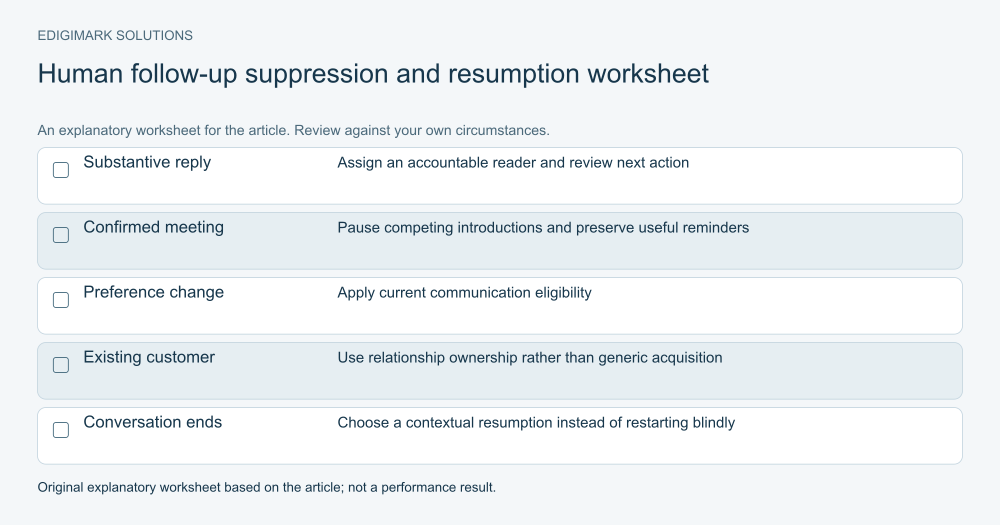
Automation suppression should prevent actions that no longer fit the record’s current context. Relevant conditions may include changed preferences, an active conversation, a confirmed meeting, customer status or a known mismatch.
Define the rule by message purpose. A generic introduction may be inappropriate during a sales discussion, while an expected meeting confirmation can remain useful. Do not stop every operational communication merely because nurture should pause.
HubSpot’s unenrolment documentation describes suppression and exit controls with behaviour that differs by workflow type and configuration. Verify the actual platform rules rather than assume a property change automatically removes every waiting message.
Test changes during delays. The person’s state may change after enrolment but before execution. The next action should still reflect the agreed process when it occurs.
What does a follow-up decision tree look like?
Start with an explicit request or an appropriate agreed trigger. Confirm identity, context and eligibility. Deliver the promised acknowledgement or information through the intended route.
Then ask whether the next action requires judgement. If so, assign a person with the request and known constraints. If a repeatable action remains appropriate, perform it with a defined owner and exit.
Before each further communication, check whether a reply, preference change, booking or relationship state makes the original path inappropriate. Define how the platform obtains those signals and how exceptions appear.
The featured diagram should show automation supporting the relationship and returning control to people at meaningful decision points. The supporting worksheet should list the conditions that change the path, rather than repeat the same workflow in another colour.
How should follow-up handle a detailed technical enquiry?
Imagine a hypothetical contact asking whether two existing systems can support a proposed CRM integration. The automated acknowledgement confirms receipt and preserves the named systems and question.
The request goes to a person who can assess scope or gather missing information. An original illustrative human response could read:
> You mentioned that both systems need to share account ownership. Before suggesting a route, could you confirm which system currently controls that assignment and whether the requirement applies to existing records as well as new enquiries?
This response uses the stated context and asks a useful question. It does not claim compatibility before reviewing the actual requirement.
Generic nurture pauses where appropriate while the conversation continues. The person records the next action and any confirmed limitation so later follow-up remains relevant. The example illustrates a method; it is not a customer case or an outcome claim.
How should follow-up handle an early-stage resource request?
Imagine a hypothetical contact requesting a website audit checklist without asking for a meeting. Fulfil the request accurately. Where appropriate and eligible, later information can help them use the checklist.
An original illustrative follow-up could read:
> The checklist is most useful when each finding includes a page, an observed issue and an owner. If your team is beginning with a small review, choose one important enquiry journey and verify the complete path first.
The message provides practical help tied to the expressed interest. It should not say the business has identified the recipient’s website problems when no audit occurred.
Offer an optional discussion route without treating lack of response as a reason to escalate pressure. If the person replies with a specific obstacle, a human can choose an appropriate next action. If they change preferences or conclude the sequence without another request, respect that state.
How should follow-up handle an existing customer enquiry?
Check the relationship before routing. A current customer asking about an additional requirement may need the established account or service owner rather than a generic new-lead sequence.
Preserve the new request as an interaction with that relationship. Avoid creating a disconnected identity or telling the person about basic onboarding they have already completed.
An original illustrative acknowledgement could read:
> Your request about the additional reporting requirement has been received. It will be reviewed with the existing account context so the next response can address the current setup.
Use that wording only when the process genuinely provides the account context. A named person should accept responsibility and clarify whether the request concerns service support, expansion or another route. The relationship state should change generic acquisition eligibility where appropriate, while expected operational responses remain available.
How should replies and scheduling changes be handled?
Make reply monitoring part of the operating process. A message sent from a person-like identity should not lead to an unmonitored inbox. Define who reads replies and how useful requests enter the relationship record.
Verify confirmed scheduling events. A clicked link does not establish that a meeting was booked. A cancellation or reschedule should alter the relevant reminder and ownership state according to the actual integration.
Keep changes connected with the current owner. Multiple people contacting the same lead about different versions of a meeting can create avoidable confusion.
Test missing and delayed events. If the scheduling system cannot reliably update the automation system, use an appropriate human or operational verification route instead of pretending the status is certain.
How can automated follow-up avoid repetitive messages?
Review the combined programme rather than each path alone. Newsletters, resource nurture, event messages and sales follow-up can overlap. Keep the relevant relationship state visible to the owners.
Give each message a distinct purpose and stop when that purpose is fulfilled. A reminder should not continue after the action is completed. A new request should be evaluated in context rather than automatically restart an old sequence.
Use repetition carefully. A useful reminder may be appropriate within a defined process, but repeated “just checking in” messages without new value can fail to help the person decide.
Do not simulate personal attention with fabricated statements about recent reviews or activity. Honest automation can be helpful without pretending to be a fresh human conversation every time.
What should a paused follow-up process do next?
Define resumption separately from suppression. A conversation ending does not mean the person should automatically receive the first message of a generic sequence again.
Use the disposition and current need to select the next action. A postponed project, resolved support question and confirmed mismatch are different states. Preserve the reason and any agreed future contact context.
Check eligibility at resumption. An earlier preference or purpose may no longer apply. Unknown or stale information should be clarified where needed rather than silently treated as current.
Give a human owner authority to choose an appropriate path when the standard rule does not fit. Record the decision so marketing can understand the relationship and avoid another conflicting restart.
How should automated lead follow-up be measured?
Begin with reliability: received requests, accepted ownership, missing context, unresolved tasks and broken response routes. These show whether the promise is being fulfilled.
Review useful conversations and later qualification separately. A count of messages sent is an activity measure, not a count of people helped or sales opportunities created.
Include customer and receiving-team feedback. Repeated requests to clarify information already submitted may indicate a handoff problem. Conflicting messages may indicate a suppression or integration issue.
Data analytics should use defined stages and observation periods. A faster acknowledgement can be operationally useful without proving that it caused a particular commercial uplift.
How should lead response workflows be tested?
Use authorised records for a new request, existing relationship, missing field, substantive reply, changed preference, confirmed meeting and cancelled meeting. Include a repeated request and an unavailable owner.
Check the public entry, acknowledgement, record context, assignment and next action. Web development should help verify the form or scheduling route when it is part of the process.
HubSpot’s workflow testing guide describes useful preview tools. Combine such previews with appropriate end-to-end verification of the receiving team’s process and the intended exception handling.
Inspect the actual message text for missing values and misleading claims. A technically correct path can still deliver an inaccurate or confusing response. Ask the person who will receive the task to review the handoff context before launch.
How should the team maintain a human follow-up standard?
Write a short standard for accurate acknowledgement, relevant context, ownership and appropriate escalation. Use examples from the actual service scope and keep them current.
Review unresolved cases and confusing responses with marketing and sales together. Identify whether the issue comes from content, data, capacity or rules. Repair the cause rather than add another generic message.
Give each workflow an owner and a review trigger. Offer changes, new integrations and revised qualification definitions can alter the appropriate response. Record consequential changes so later reports remain understandable.
Ask Edigimark to connect automated follow-up with accountable human response when your system sends messages reliably but leads still repeat questions, receive conflicting contact or wait without a clear owner.
Frequently asked questions
Does automated follow-up have to sound personal?
It should sound clear, relevant and honest. Refer to reliable context and provide a useful next step. Avoid pretending a person has reviewed the request when the message is an automatic acknowledgement.
When should a human take over?
When the request needs interpretation, a tailored recommendation, clarification or an appropriate relationship conversation. Define the route and receiving ownership so the handoff produces an actual next action.
Should generic nurture continue after a meeting is booked?
Review it against the message purpose and current relationship. Competing introductions may need to pause, while expected operational confirmations may remain useful. Verify the booking event and test the rule.
Is inserting a first name enough for personalised follow-up?
No. Relevant context and an appropriate response matter more. Handle missing values gracefully and avoid inferred claims about the person’s needs or readiness.
What should happen when the assigned owner is unavailable?
Use a monitored fallback or coordinator who can reassign the request and preserve context. The business should align its external response promise with actual coverage and escalation capacity.